Editorial Design & Layout • Scripps College • 2024
Scripps College Journal
50+
pages
20+
featured artists
40+
hours of production
100+
attendees at launch event
Project Overview
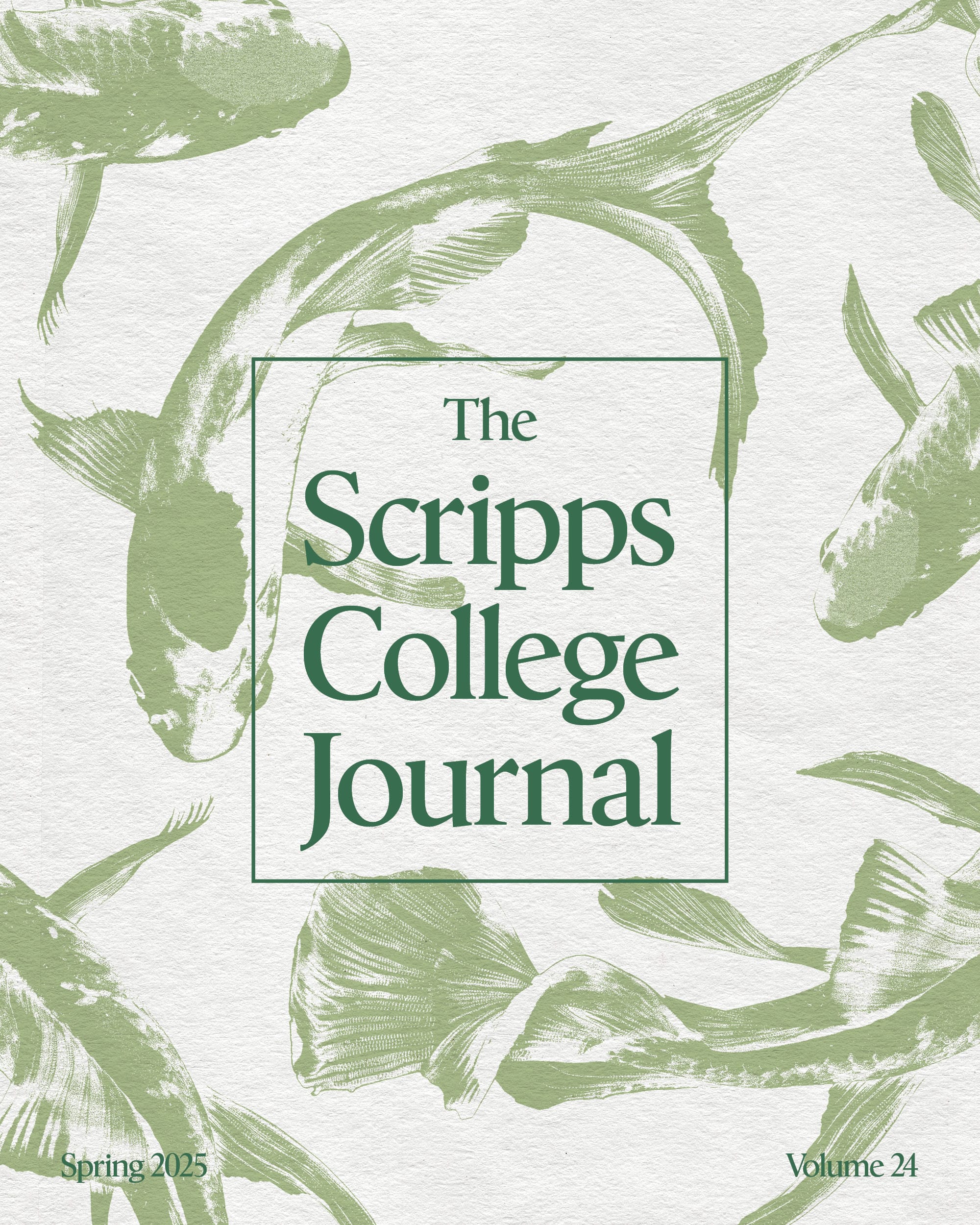
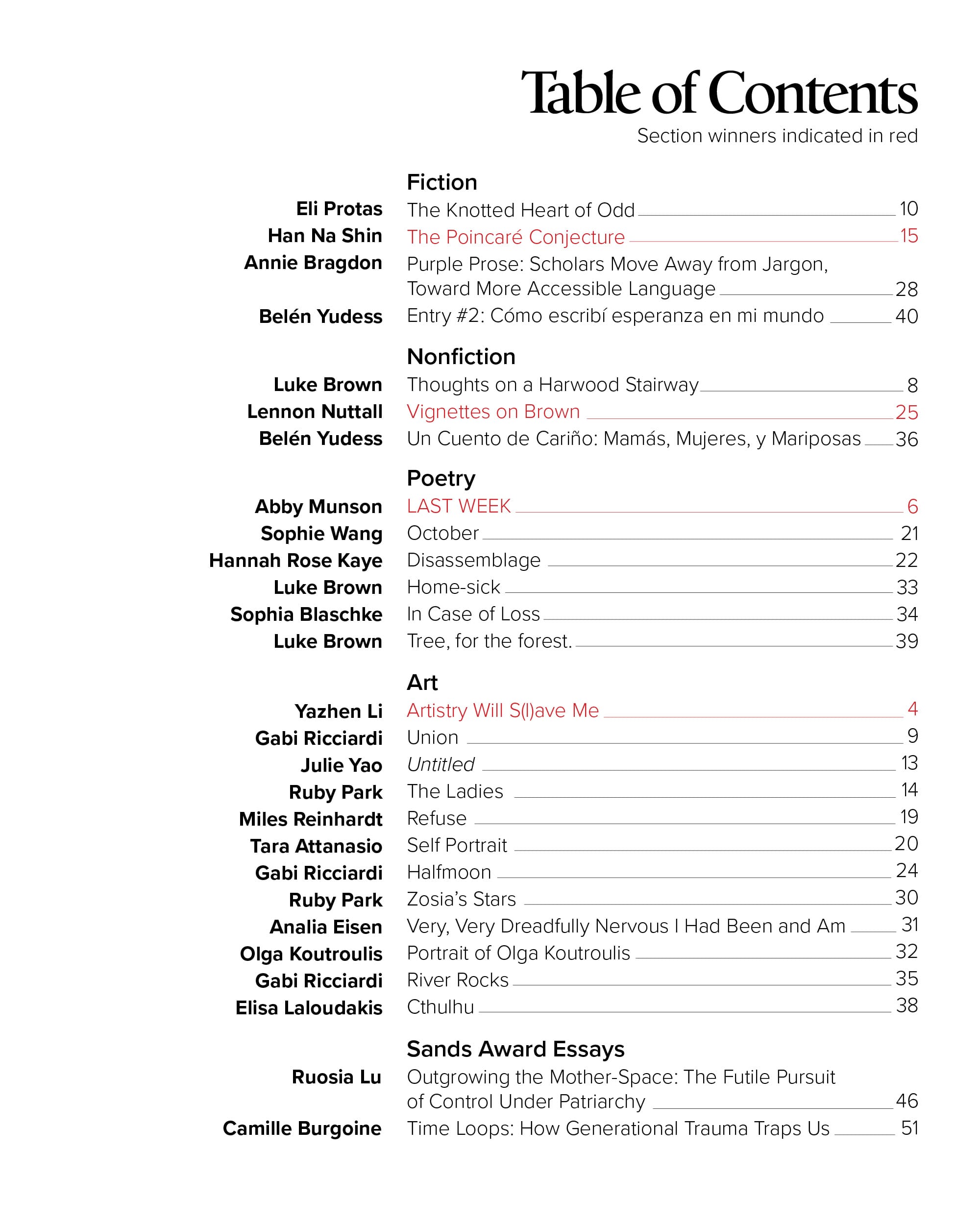
The Scripps College Journal is the college’s annually published literary journal, showcasing student works in creative nonfiction, fiction, poetry, and visual art. As Layout Editor, I was the sole designer responsible for the 2025 edition—a 50+ page publication featuring work from 20+ artists selected through a highly competitive submission process.
I owned the complete design process: establishing layout standards, designing every page, creating the cover and spine, collaborating with artists to preserve their creative visions, and coordinating with the publisher for print production. The project required 40+ hours of hands-on layout work and culminated in an open mic launch event for over 100 attendees.
My Role
As Layout Editor, I was the sole designer responsible for the complete publication.
Built the Design System
Established typography, spacing, margins, and formatting rules flexible enough to handle poetry, prose, creative nonfiction, and visual art while maintaining consistency across 50+ pages.
Designed Every Layout
Made decisions about how each piece would appear on the page—balancing white space, text flow, and visual hierarchy to give submissions appropriate emphasis without overwhelming the work itself.
Collaborated with Artists
Worked directly with 20+ contributors to understand their formatting needs and ensure layout choices honored their creative intent.
Sequenced the Journal
Partnered with editors to determine the order and pacing of pieces, using layout to reinforce editorial choices—alternating between dense prose and visual breathing room.
Designed Cover & Coordinated Production
Created the cover and spine design, then worked with the publisher to ensure all files met technical specifications for print.
Launched the Journal
Helped organize an open mic night where featured artists read their work to an audience of over 100 people.
The Challenge
Literary journals live or die by restraint. The design needs to serve the work without imposing a heavy hand, but it also can’t feel generic. With 20+ artists selected through a competitive process, each piece deserved thoughtful treatment—but the journal also needed to feel like a curated whole, not a collection of disconnected parts.
The complexity came from range. Concrete poetry has completely different spatial needs than a six-page essay. Visual art reproductions require different technical considerations than prose. I needed a design system that could flex across all these formats while maintaining a consistent visual identity, all within the technical constraints of print production.
Approach
I anchored the system in a typography palette that felt literary and timeless—sophisticated enough for an academic publication, readable enough to disappear when needed. From there, I built spacing and formatting rules that could accommodate different content types: tight leading for dense prose, generous white space for short poems, full bleeds for artwork.
Collaboration shaped everything. Working directly with artists meant understanding when to preserve unconventional formatting choices and when to suggest alternatives that would work better in print. For sequencing, I treated the journal like a single reading experience, using page breaks, spacing, and visual pacing to create rhythm throughout.
Impact & Outcomes
The final publication honored every contributor’s work while feeling cohesive and intentional.
Artists were satisfied with how their pieces appeared, and the open mic night brought over 100 people together to celebrate.
The journal represented Scripps College’s literary community at a professional standard that did justice to the competitive selection process.
Key Learnings
Design for literary work is an exercise in restraint. The best layouts are ones readers don’t consciously notice—they just experience the work itself. Establishing clear systems early saved me when things got complicated, while direct collaboration with artists taught me when to advocate for design decisions and when to defer to creative vision.